A weighted hoop turns a familiar childhood movement into a legitimate at-home workout tool. Here’s how it can fit into your fitness routine.
Keeping the hoop spinning calls on your abdominals, obliques, and lower back with every rotation, which may help build core strength over time with consistent practice.
The added weight increases resistance compared to a traditional plastic hoop, which can help elevate your heart rate during a session for a more active cardio routine.
While your core does most of the work, your hips, glutes, legs, and arms all engage rhythmically to help keep the hoop moving.
Hooping doesn’t feel like a typical workout, which can make it easier to stay consistent and look forward to your next session.
Used consistently alongside a balanced diet and healthy habits, weighted hooping can be one part of a broader approach to staying active.
Detachable sections mean your hoop breaks down flat, so it’s easy to store in a closet or pack for a trip.
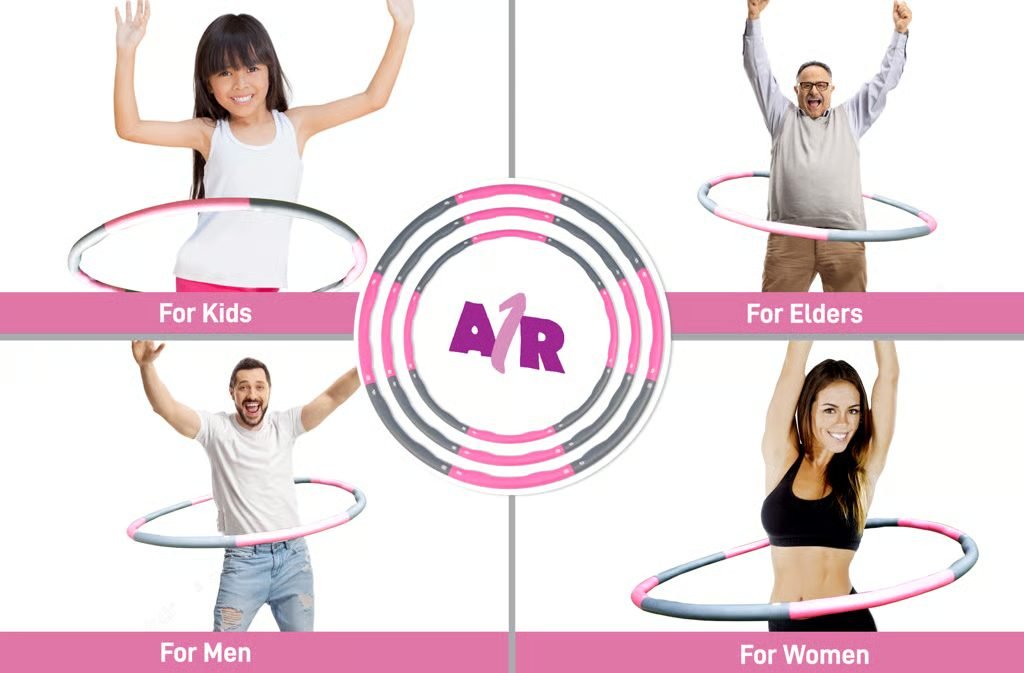
You don’t need a gym membership or a block of free time to build a hooping habit. Many users start with short 5–10 minute sessions and build up gradually as their comfort and stamina improve. Because the movement is enjoyable, it’s often easier to stay consistent compared to more repetitive workouts.
Read the Beginner Guide